
logo dark logo light logo
  • Home
  • Documentary
    • Soil Is Our Mother
    • Hellenikon
    • Mati, a year later
    • Rafael Trejo – Dukes on the Ropes
    • 35ο 09’00’’Ν033ο16’38’’Ε – ΙΑΤΑ: NIC – ICAO: LCNC
    • Confronting Vanity
    • Primero De Mayo
    • Ashura Day
    • Refu-Chess
    • Unforgotten Days
  • Personal
    • My Homeland
    • As Long As It Lasts
    • Revere Emir
    • Memory & Loss
    • H2O ±
    • Manipulation
    • Self-Portrait
    • Under foreign Skies
  • Stories
    • Travel
      • Banana Island
      • Katara Village
      • Souq Waqif
  • Video
  • Book
  • Blog
  • Publications
  • About
  • Contact
Mobile Logo
  • Home
  • Documentary
    • Soil Is Our Mother
    • Hellenikon
    • Mati, a year later
    • Rafael Trejo – Dukes on the Ropes
    • 35ο 09’00’’Ν033ο16’38’’Ε – ΙΑΤΑ: NIC – ICAO: LCNC
    • Confronting Vanity
    • Primero De Mayo
    • Ashura Day
    • Refu-Chess
    • Unforgotten Days
  • Personal
    • My Homeland
    • As Long As It Lasts
    • Revere Emir
    • Memory & Loss
    • H2O ±
    • Manipulation
    • Self-Portrait
    • Under foreign Skies
  • Stories
    • Travel
      • Banana Island
      • Katara Village
      • Souq Waqif
  • Video
  • Book
  • Blog
  • Publications
  • About
  • Contact
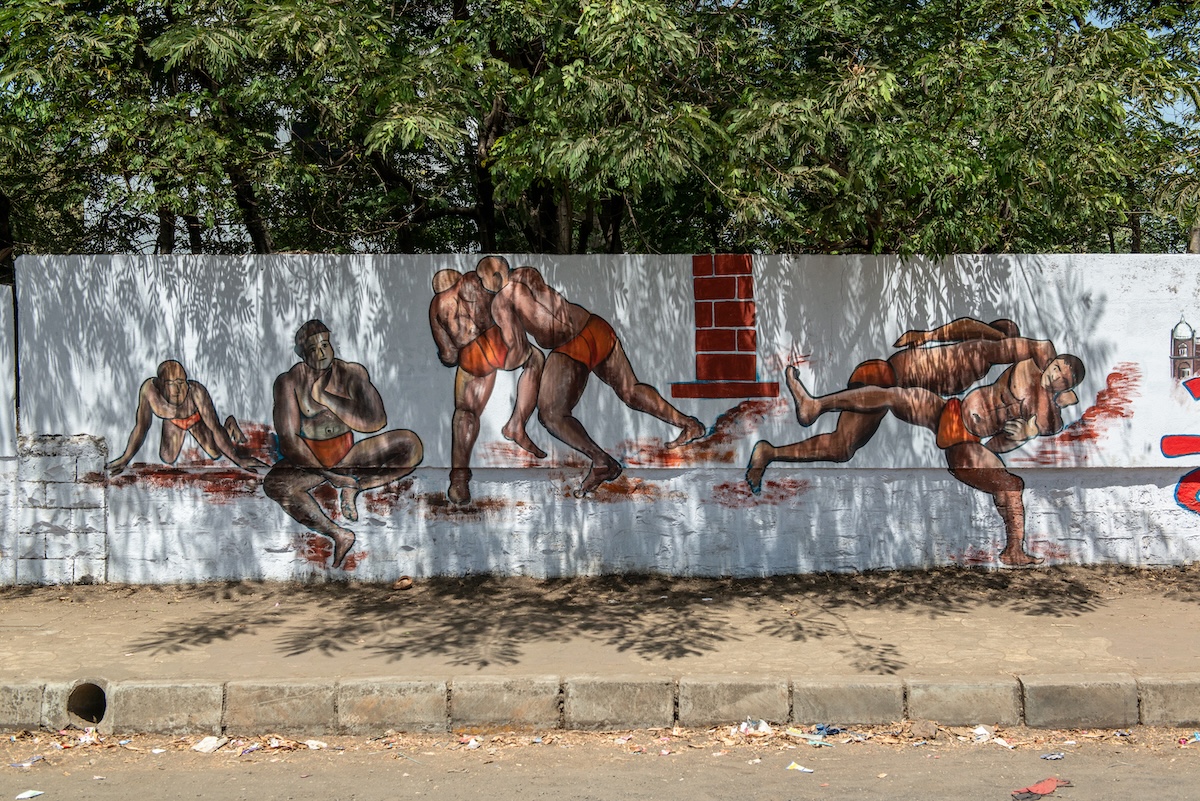
The wrestling wall – A mural depicting wrestlers on a main road in Kolhapur, a city with a long tradition in kushti. The sport flourished during the reign of Shri Chatrapati Shahu Maharaj, leading to the establishment of hundreds of Akhadas (Academies) across Kolhapur. This influx garnered attention nationwide, attracting elite wrestlers from across India.
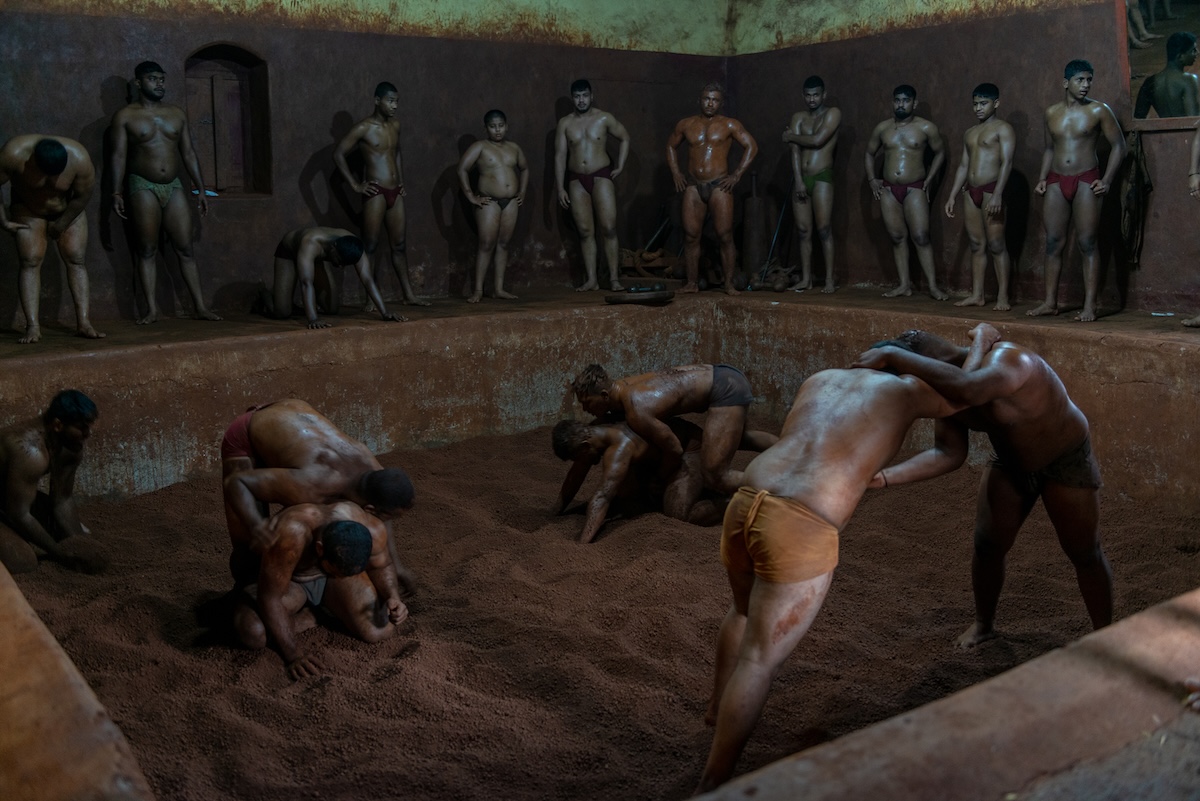
The pit – Kushti is performed in a pit of red soil inside Talims or Akhadas – traditional gyms that are nothing like their modern counterparts.
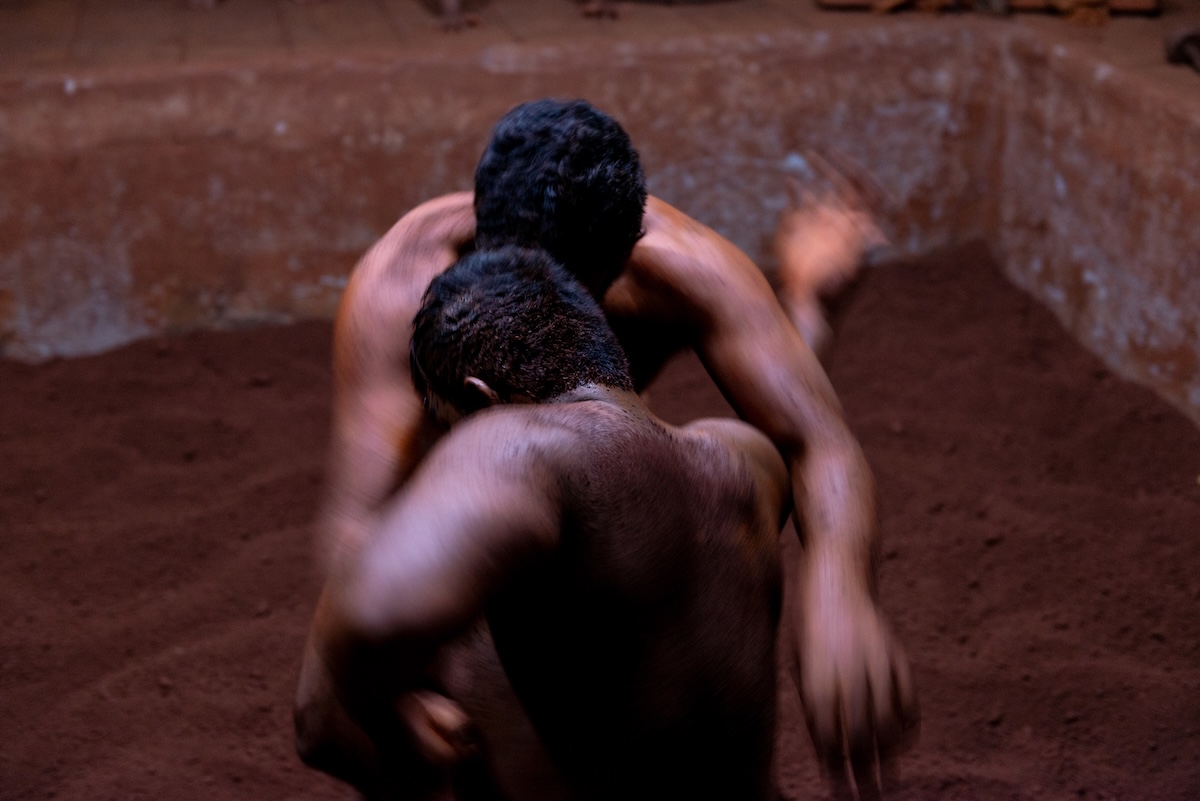
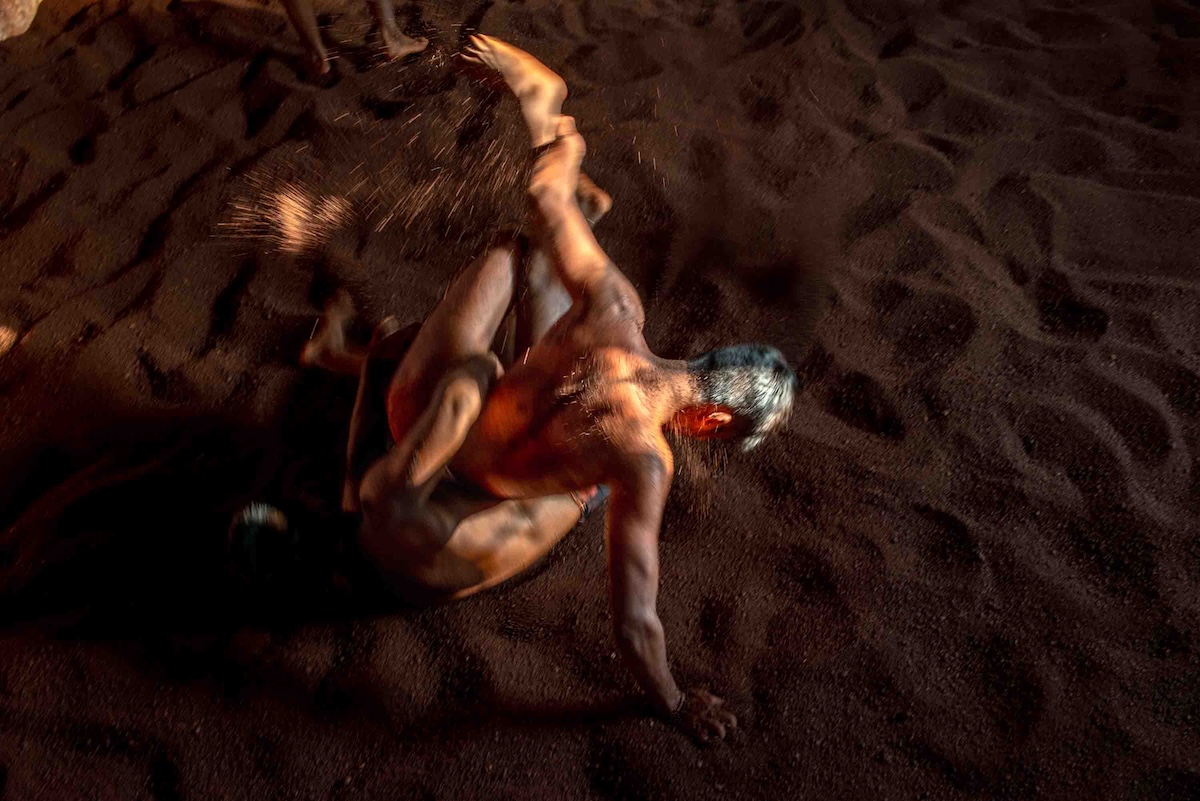
Fighting – Two wrestlers fighting at practice time into the pit.
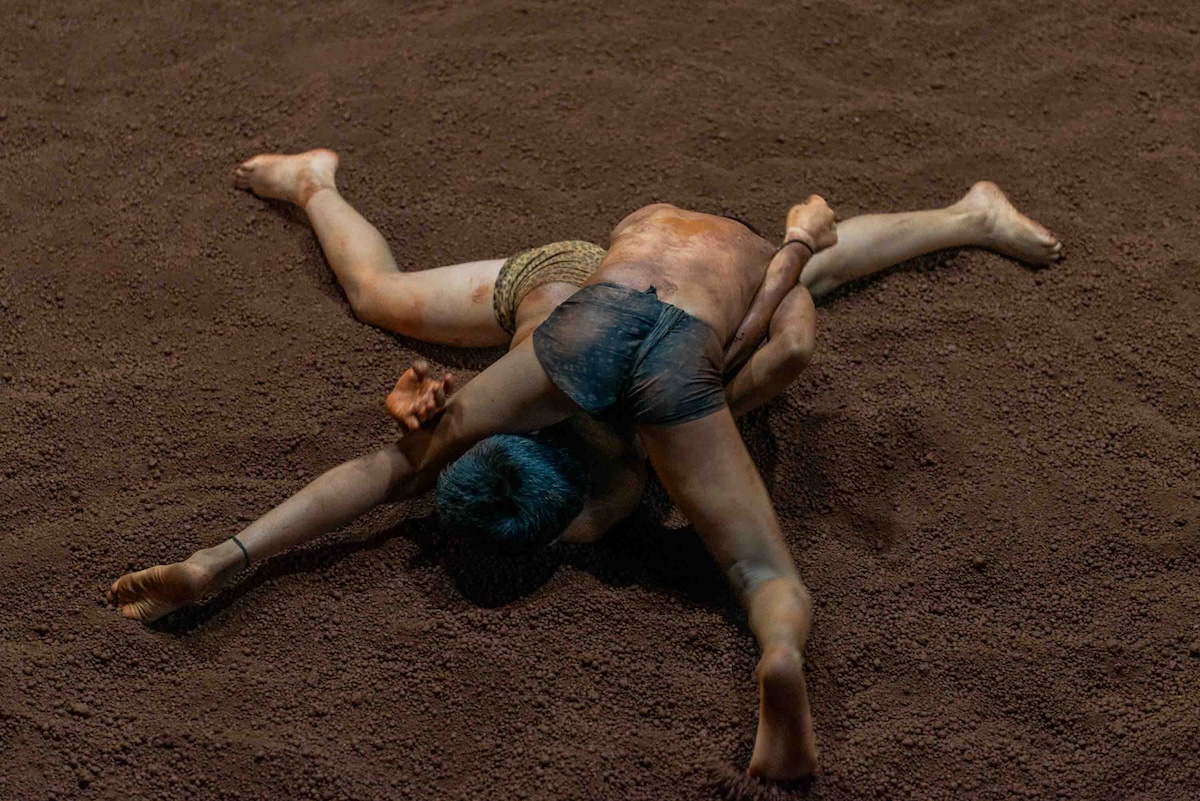
Practice – The practice of two wrestlers. Kushti is more about technique than size.
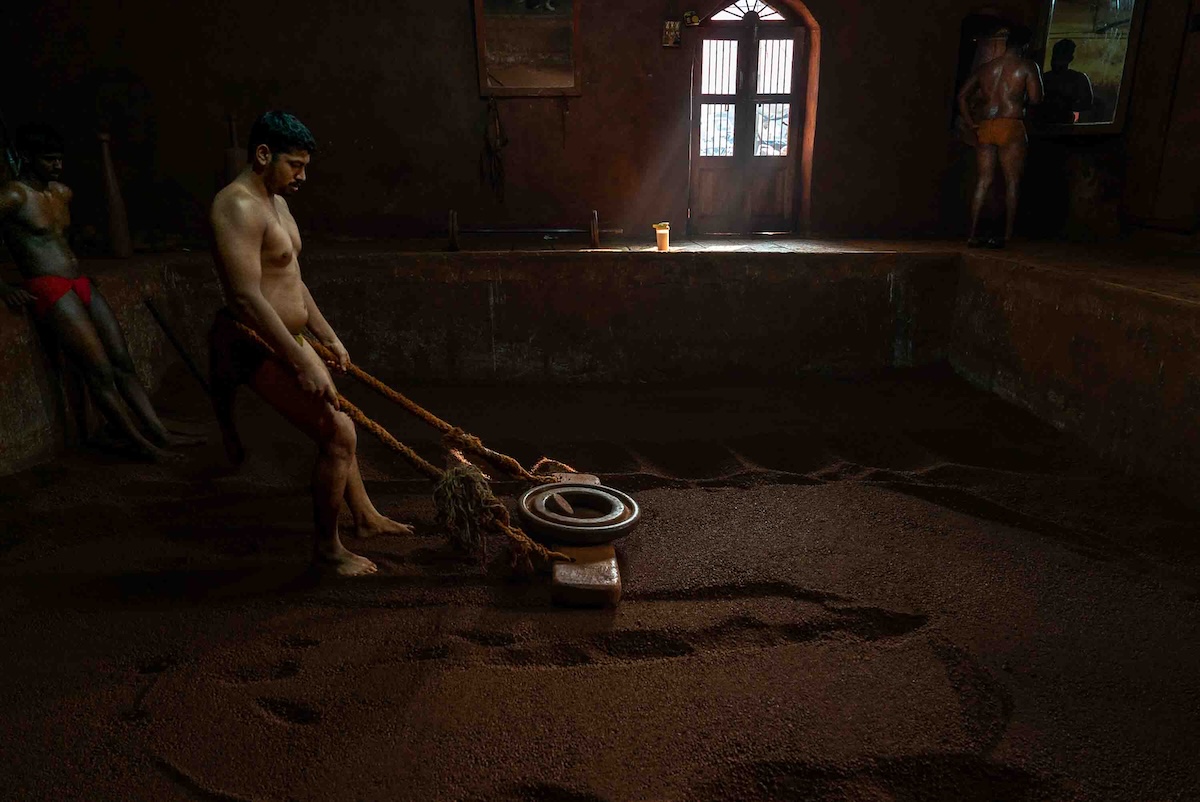
Prepare the soil – A wrestler ploughs the mud with old gym gear to prepare the soil before practice.
Training
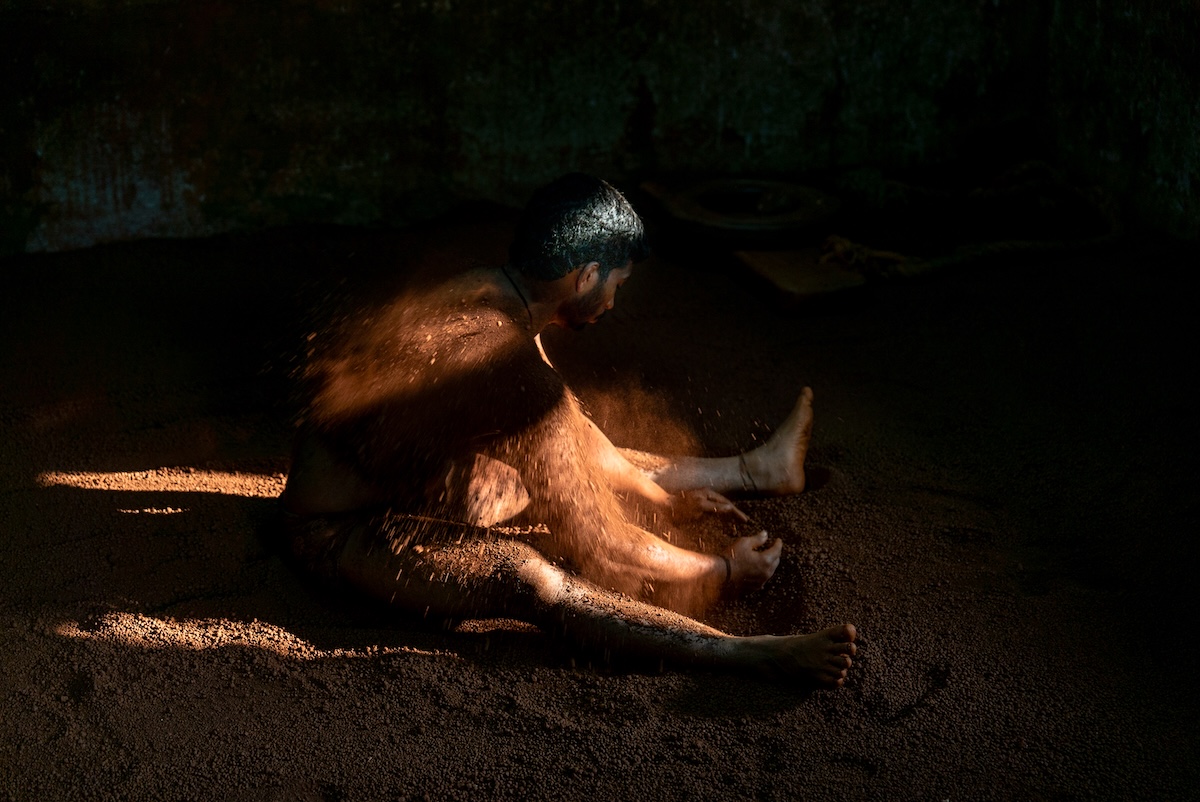
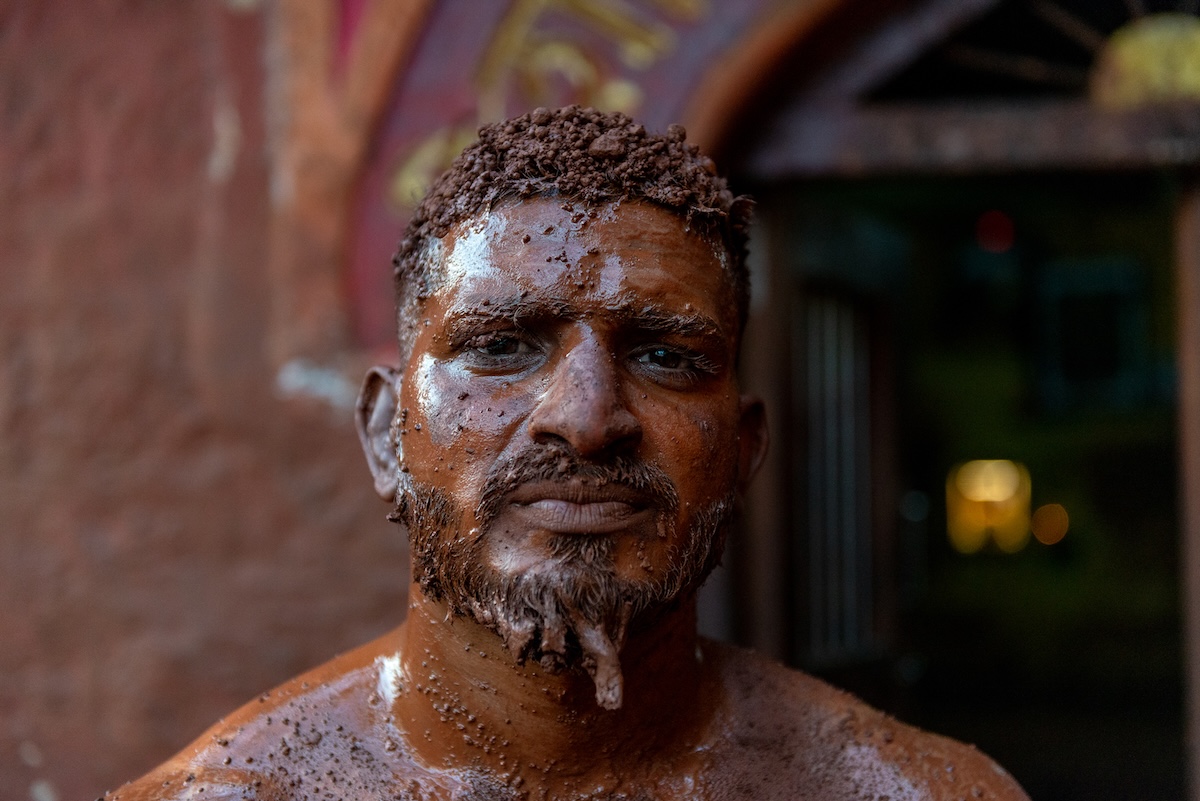
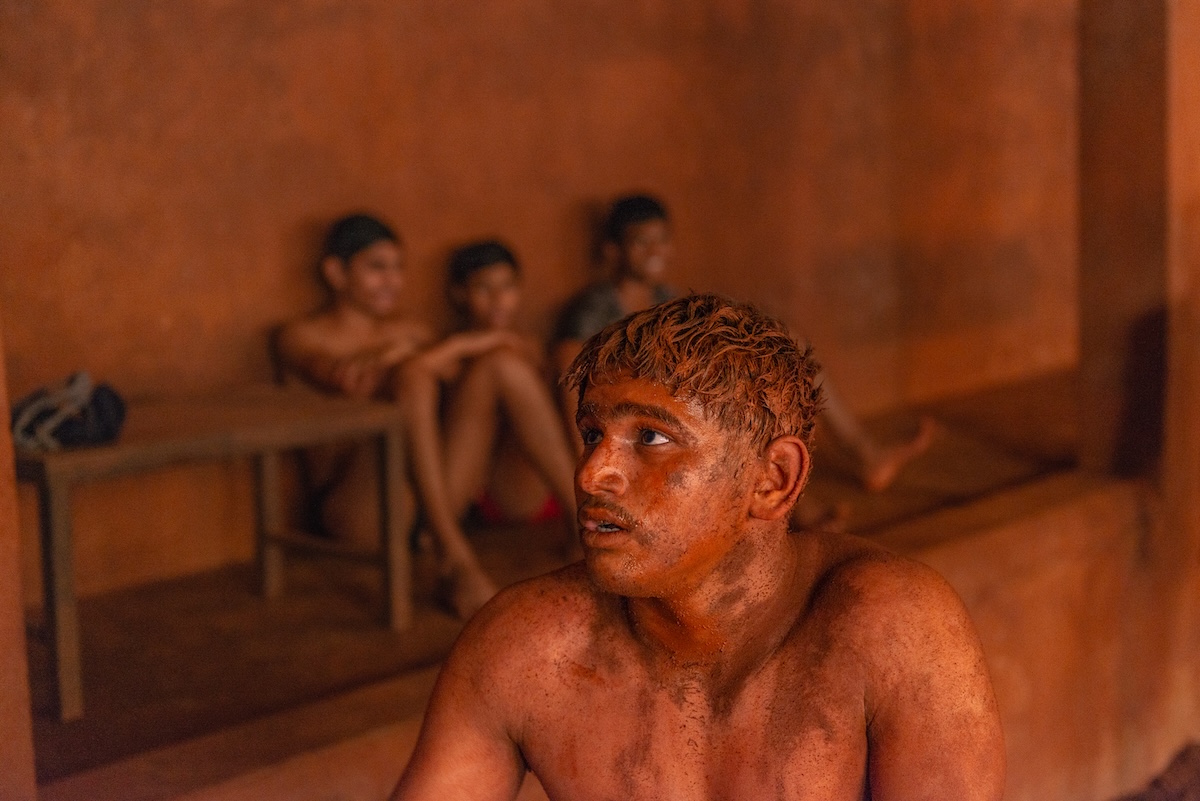
Soil bath -Soil has beneficial properties due to the various components it contains and protects athletes from injuries. The red soil mixed with a number of ingredients – from camphor, coconut milk and turmeric to ghee, lemon juice and herbs.
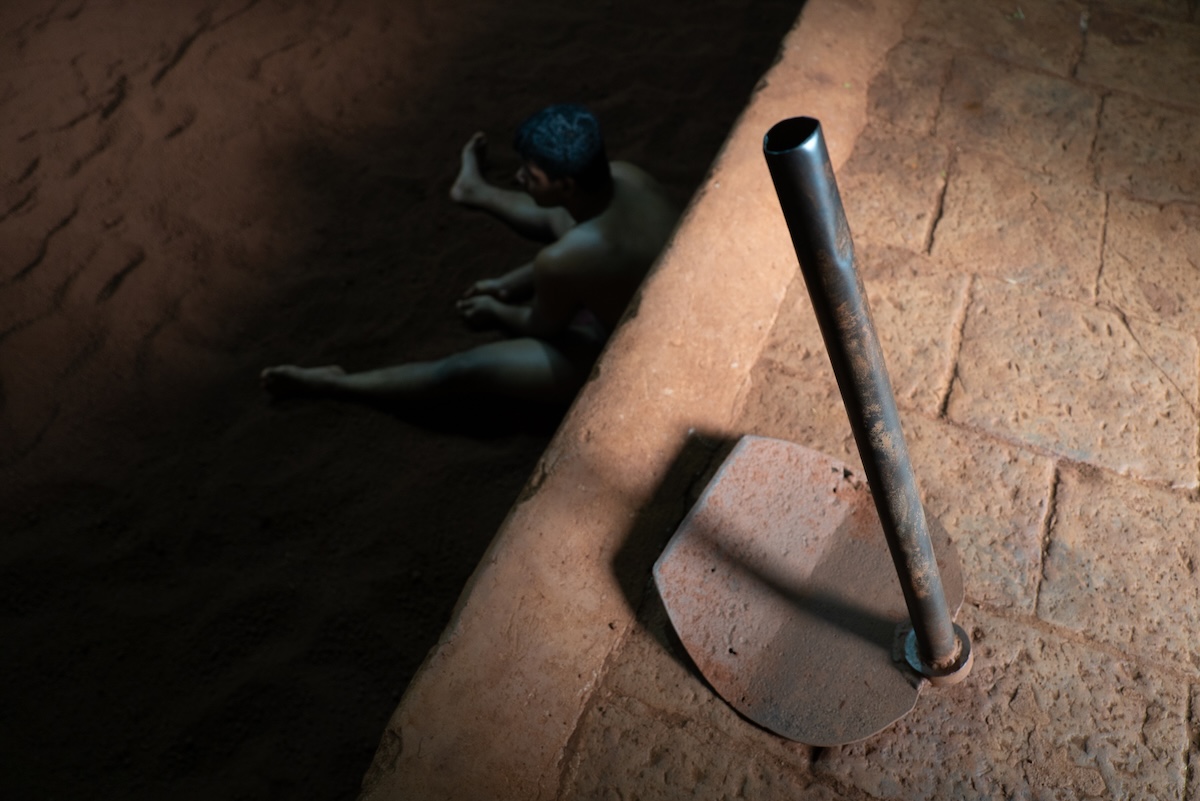
The wrestler and his hoe – The wrestler having left the hoe, rests in the pit he dug earlier with it.
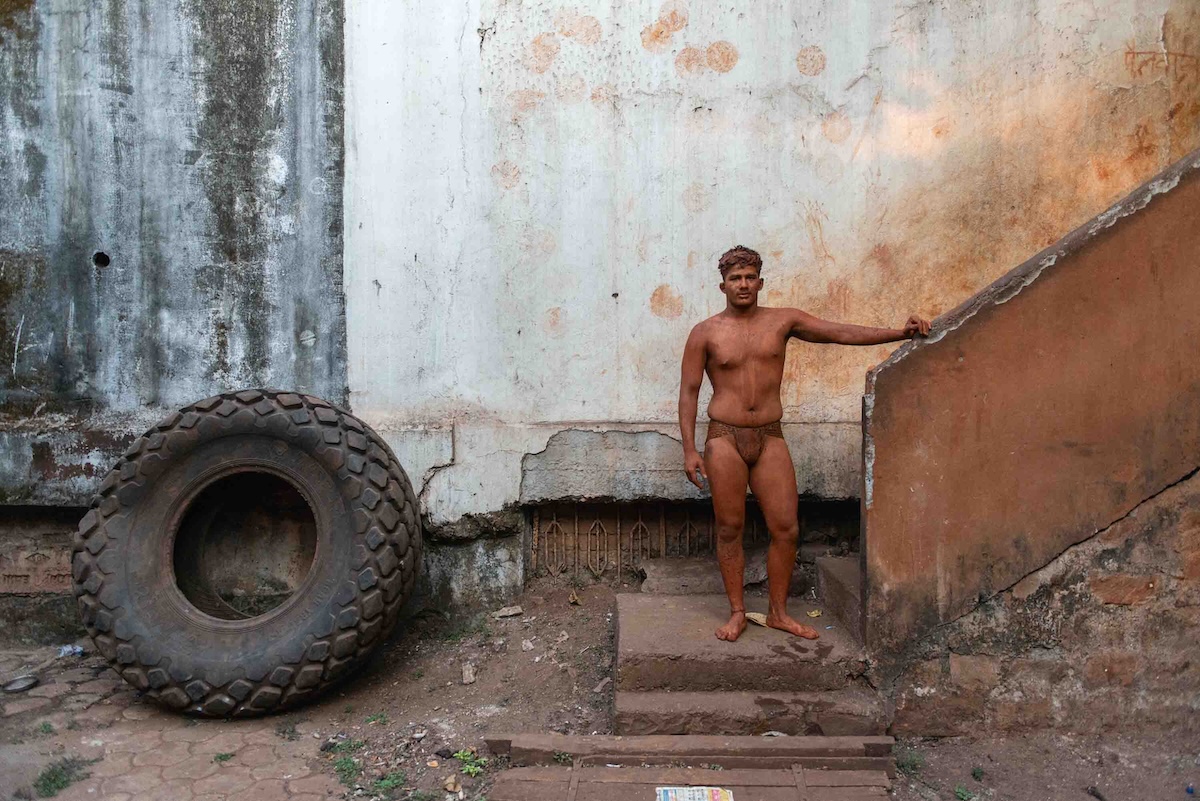
‘My name is Indrajeet’ – Indrajeet Mole, poses for a photograph after training in the clay pit in Gangavesh Talim, Kolhapur, Maharashtra.
Indrajeet Mole, poses for a photograph after training in the clay pit in Gangavesh Talim, Kolhapur, Maharashtra.
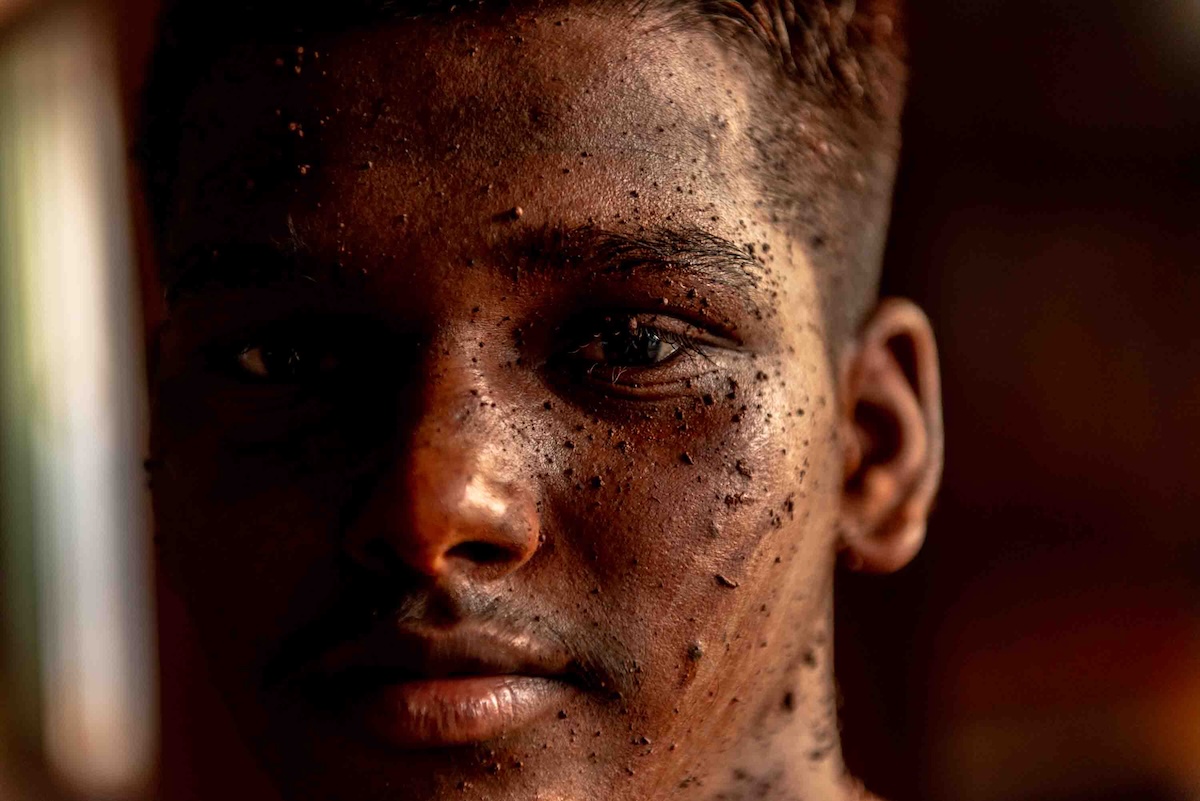
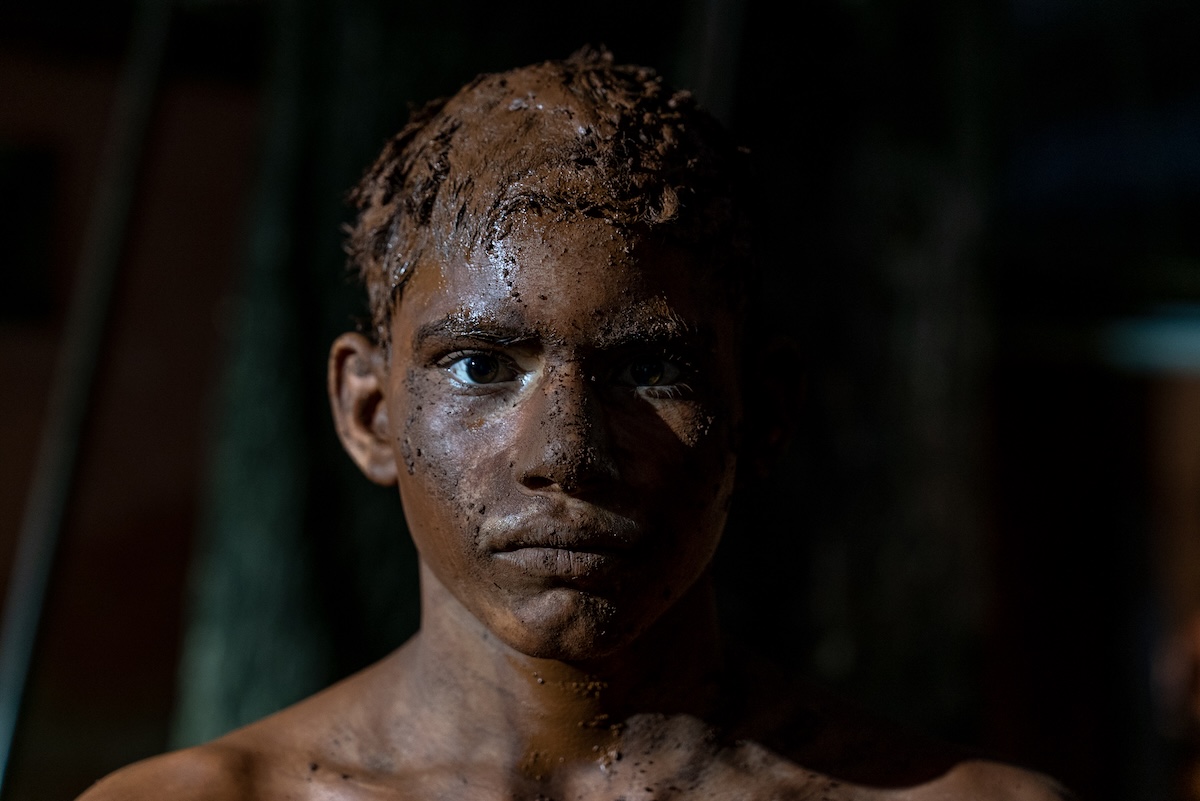
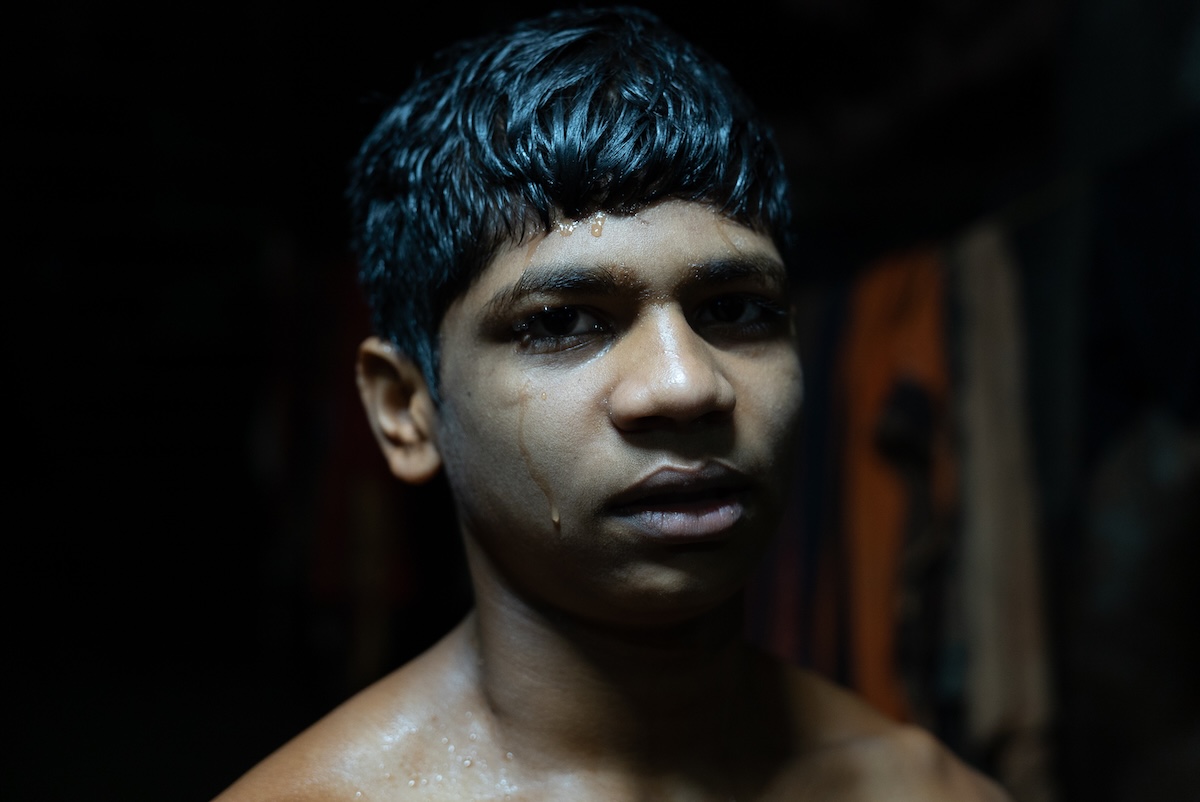
Shivaji Mendhe in Gangavesh Talim – For many, kushti is a family affair. Fifteen-year-old Shivaji Mendhe is far from his family in Karmala Taluka but has his two cousins training with him at Gangavesh Talim, Kolhapur, Maharashtra
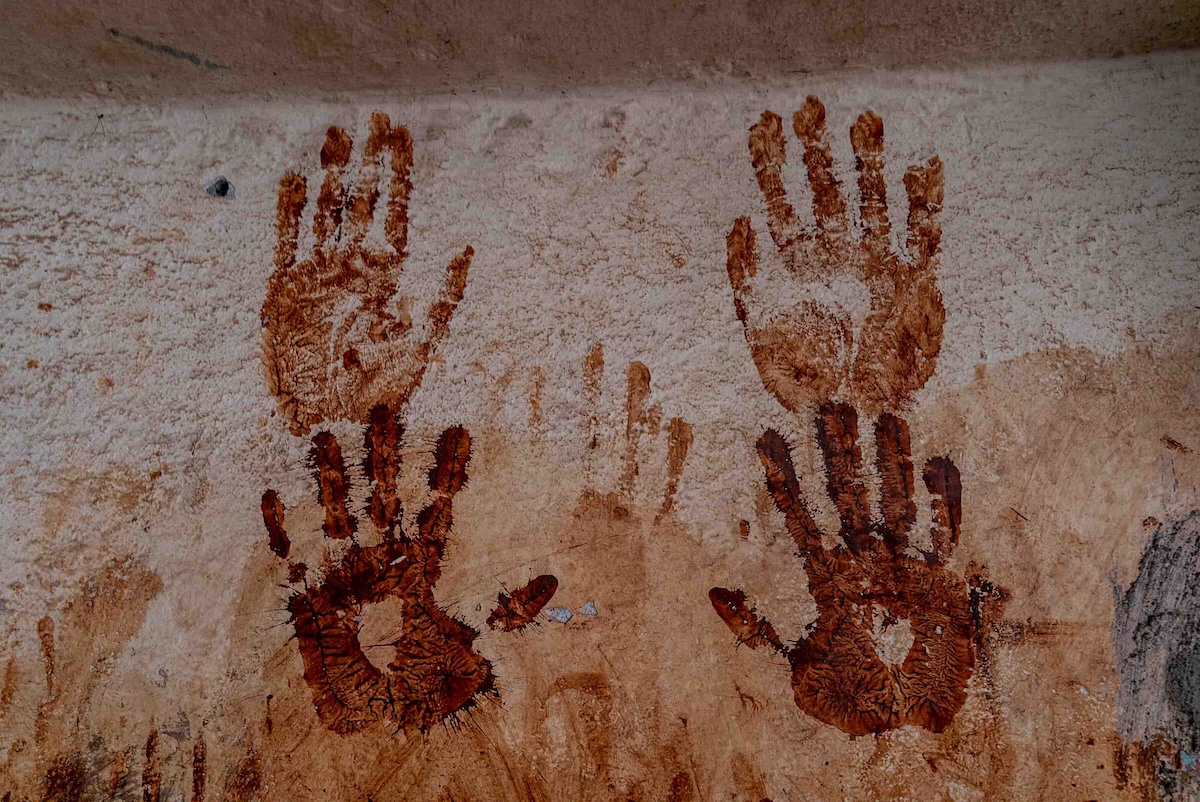
‘Red hands’ – Detail from a wall at Motibaq Talim.
Kartik Ganeshacary into the pits of reddish soil in New Motibaq Talim, Kolhapur, Maharashtra.
Vishal Sachin Dhawale, a wrestler from Pune, is among those to have relocated to Kolhapur to pursue their kushti aspirations. Motibaq Talim, Kolhapur, Maharashtra.
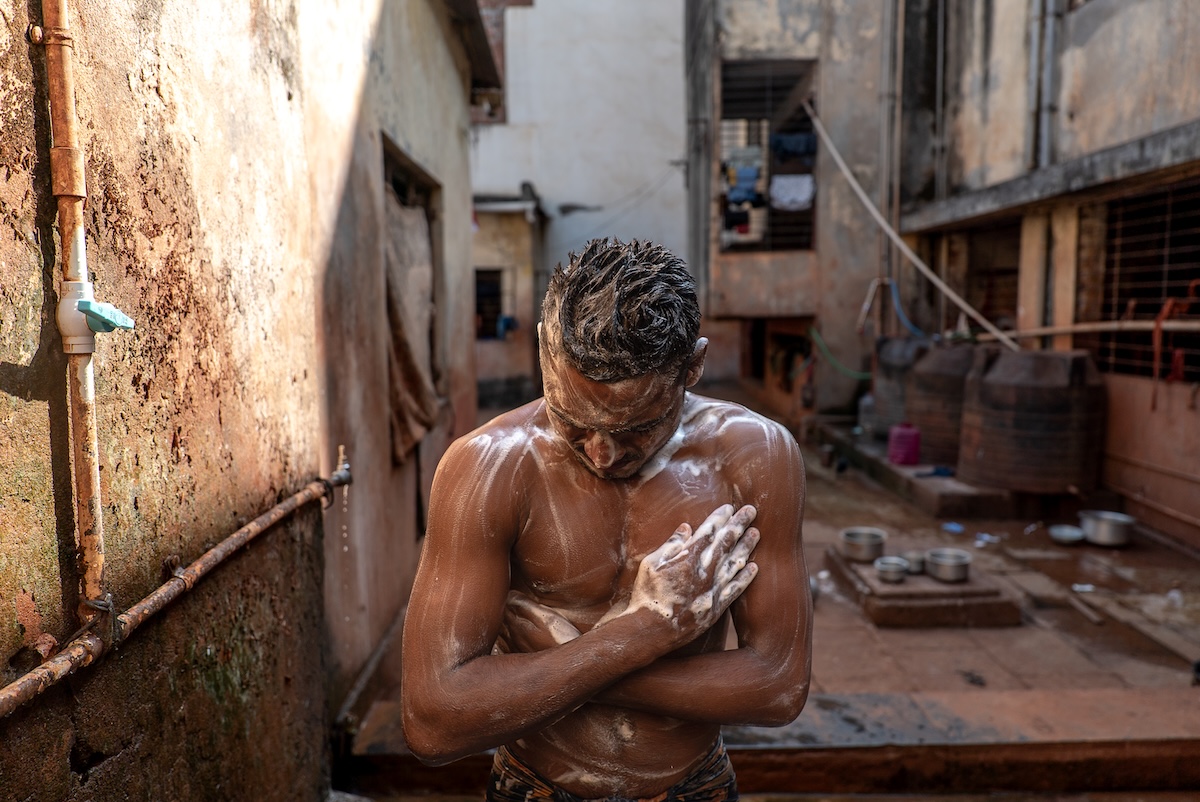
Ajit Magdum in the courtyard of Motibaq Talim – Ajit Magdum takes his daily bath after training at the Motibag Talim outdoor baths.
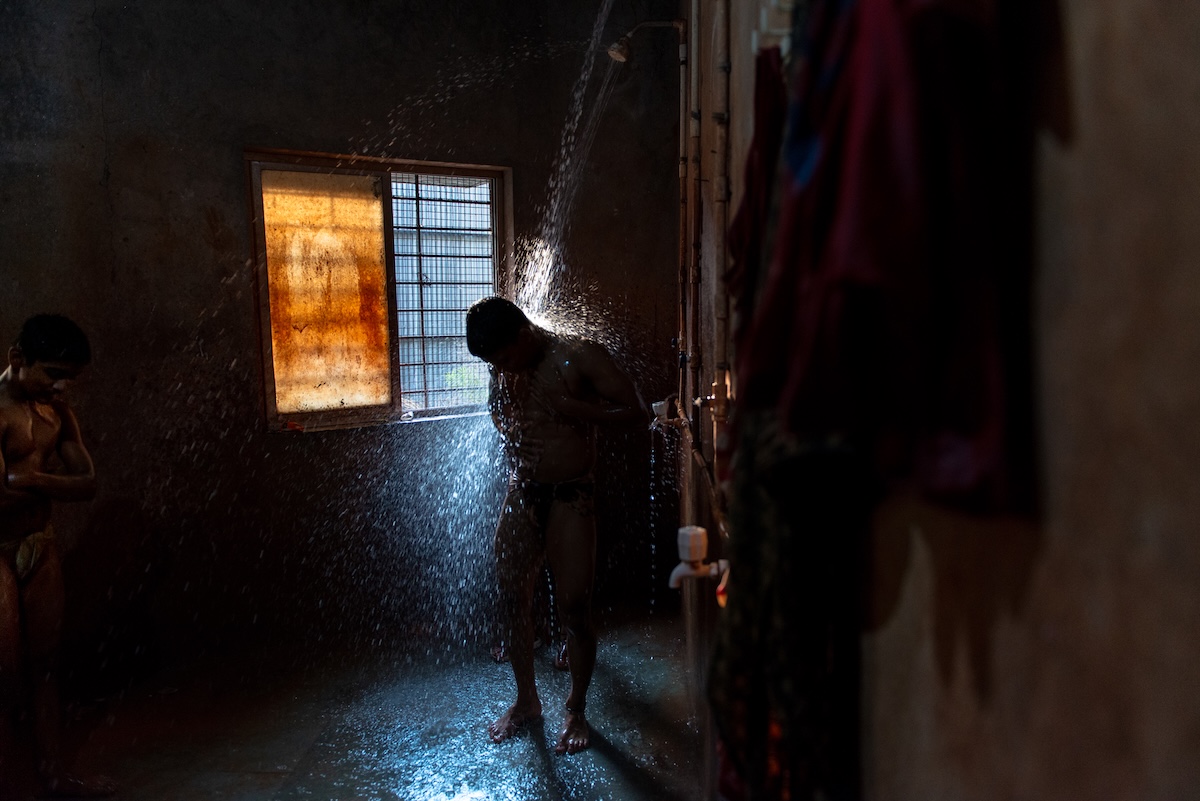
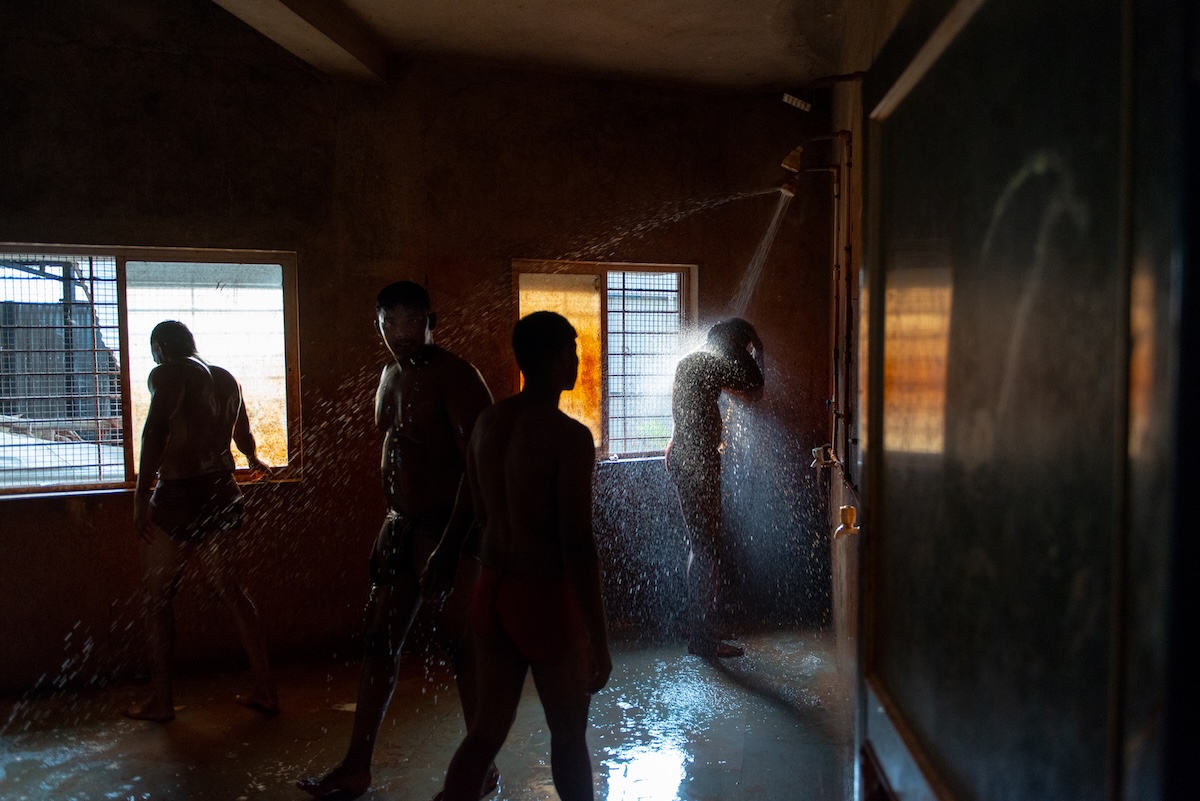
The bath I – Wrestler take a shower, after another day of hard training in Rashtrakul Kushti Sankul, Kolhapur, Maharashtra.
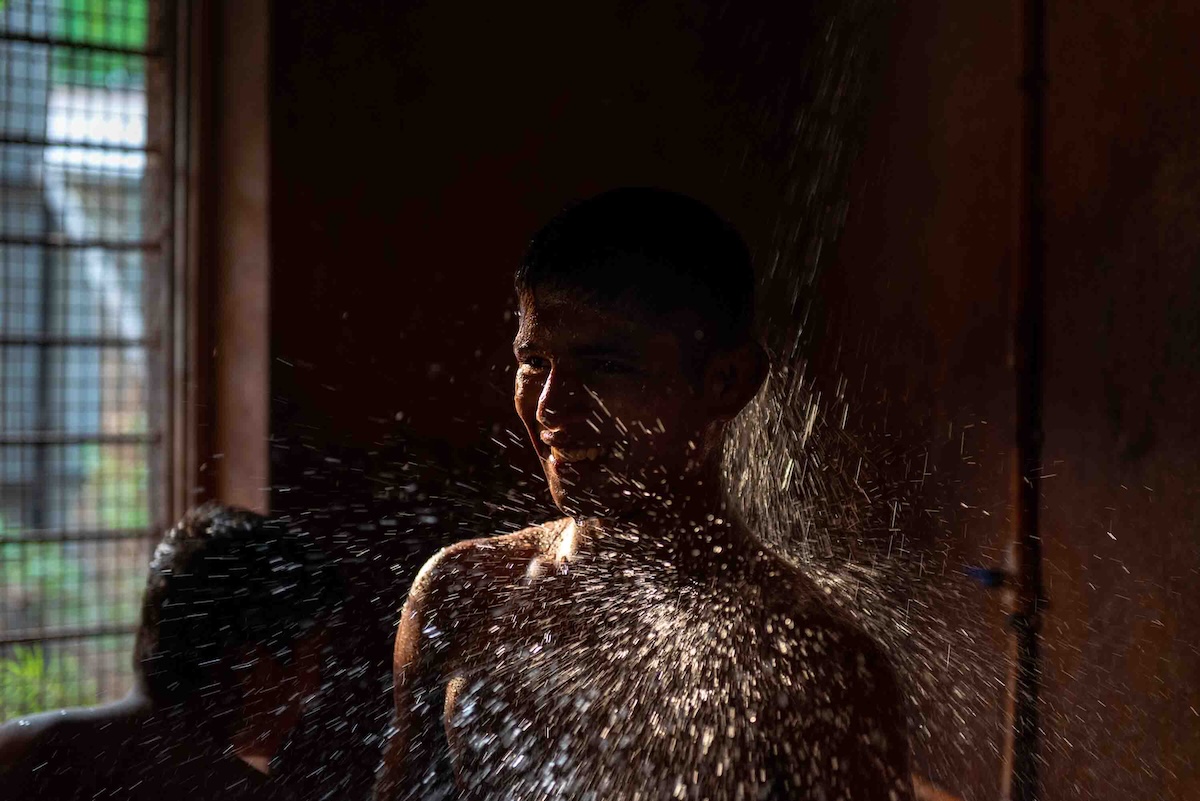
Smiling into the bath – A wrestler laughing while take a shower, in Rashtrakul Kushti Sankul, Kolhapur, Maharashtra.
The bath II – Wrestlers take a shower, after another day of hard training in Rashtrakul Kushti Sankul, Kolhapur, Maharashtra.
‘Waiting his turn’ – An athlete waits for his turn to have a shower after another grueling training session.
Aditya Sardar out of Shree Shahu Vyayam Akhada Talim poses for a photograph after having finished training.
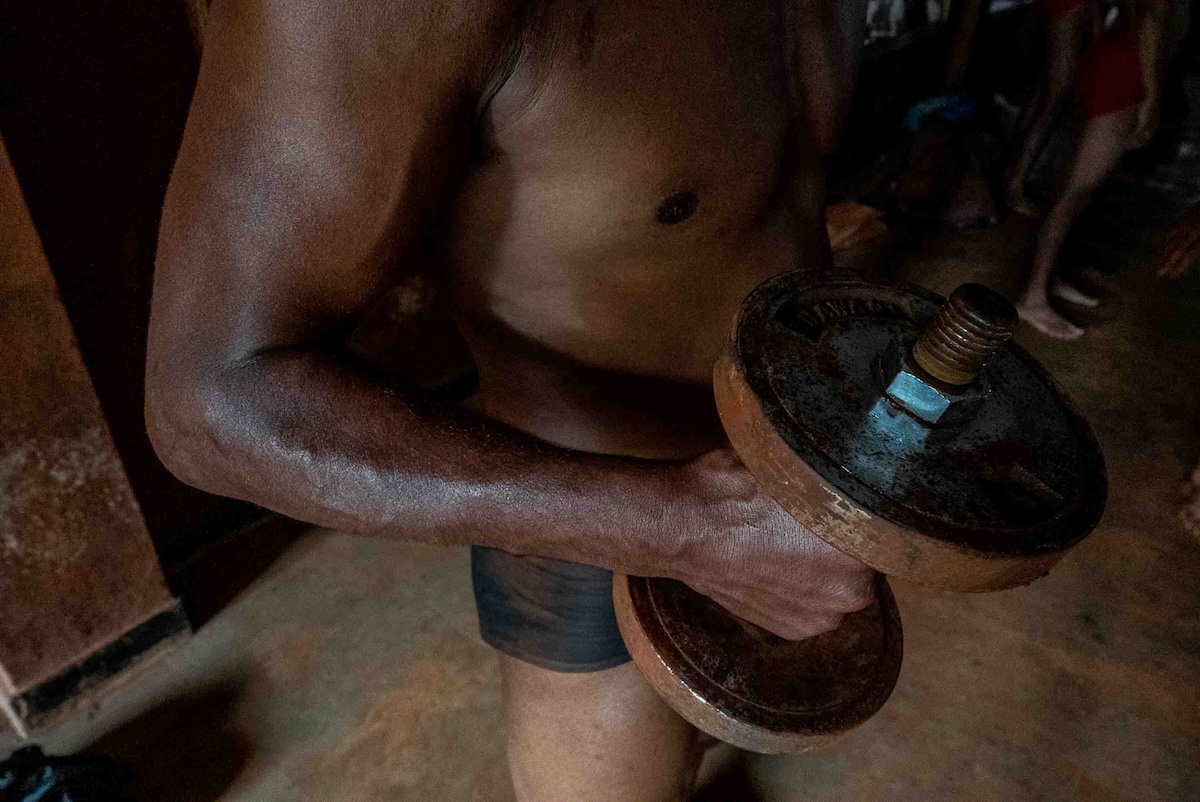
Wrestlers training in talims share everything, including the workout equipment – detail
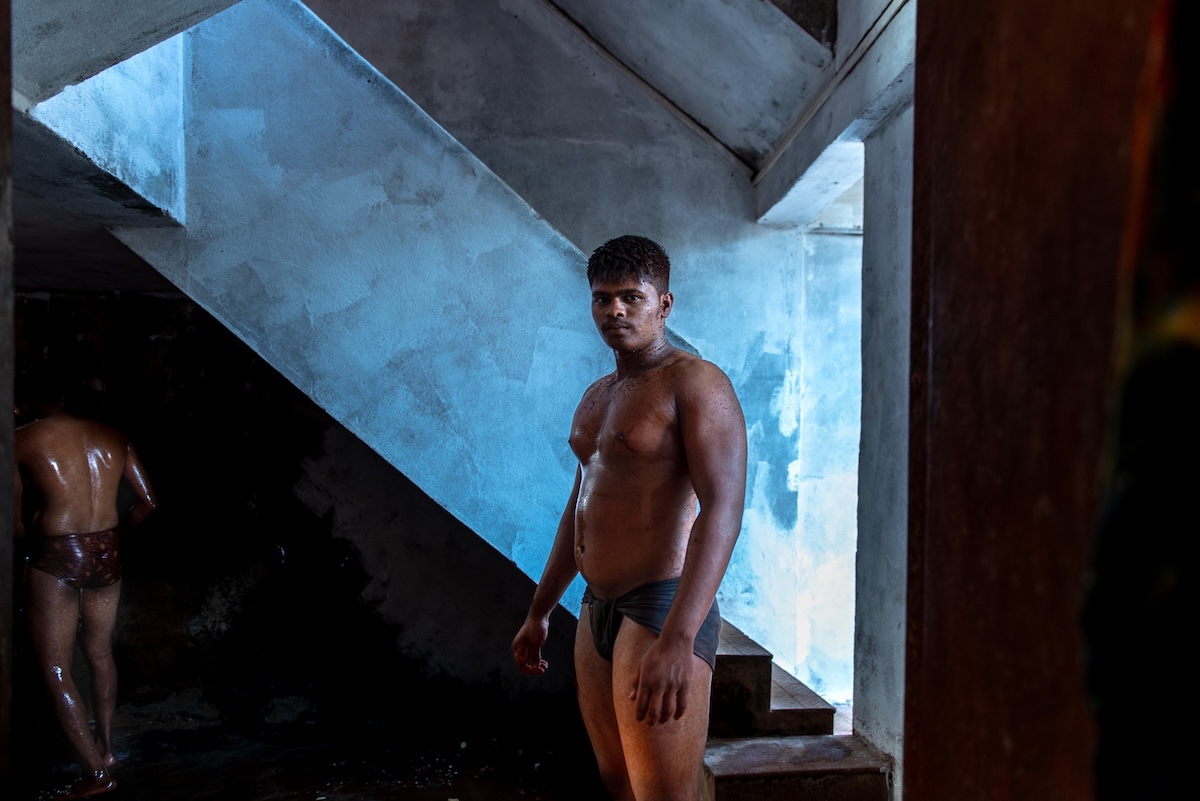
Swaroop Rajendra Sankpal (16), poses next to the stairs leading up to the wrestlers’ sleeping area in New Motibaq Talim.
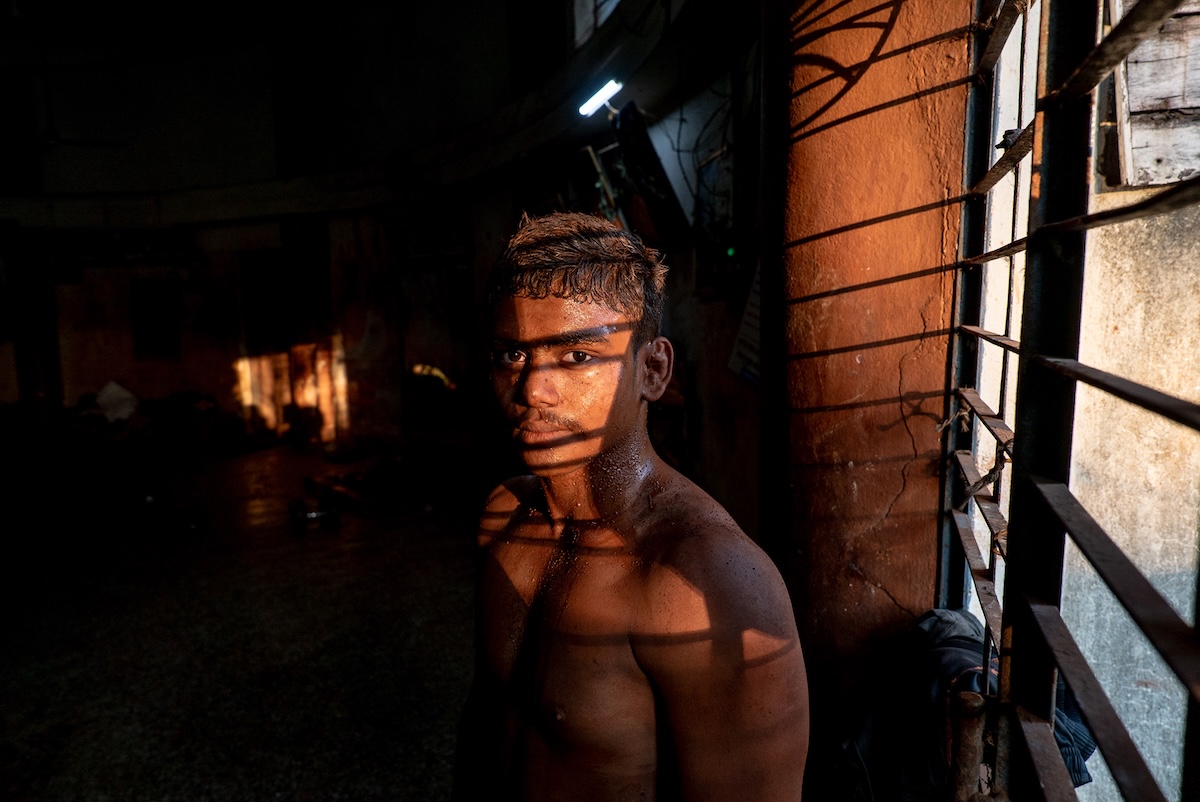
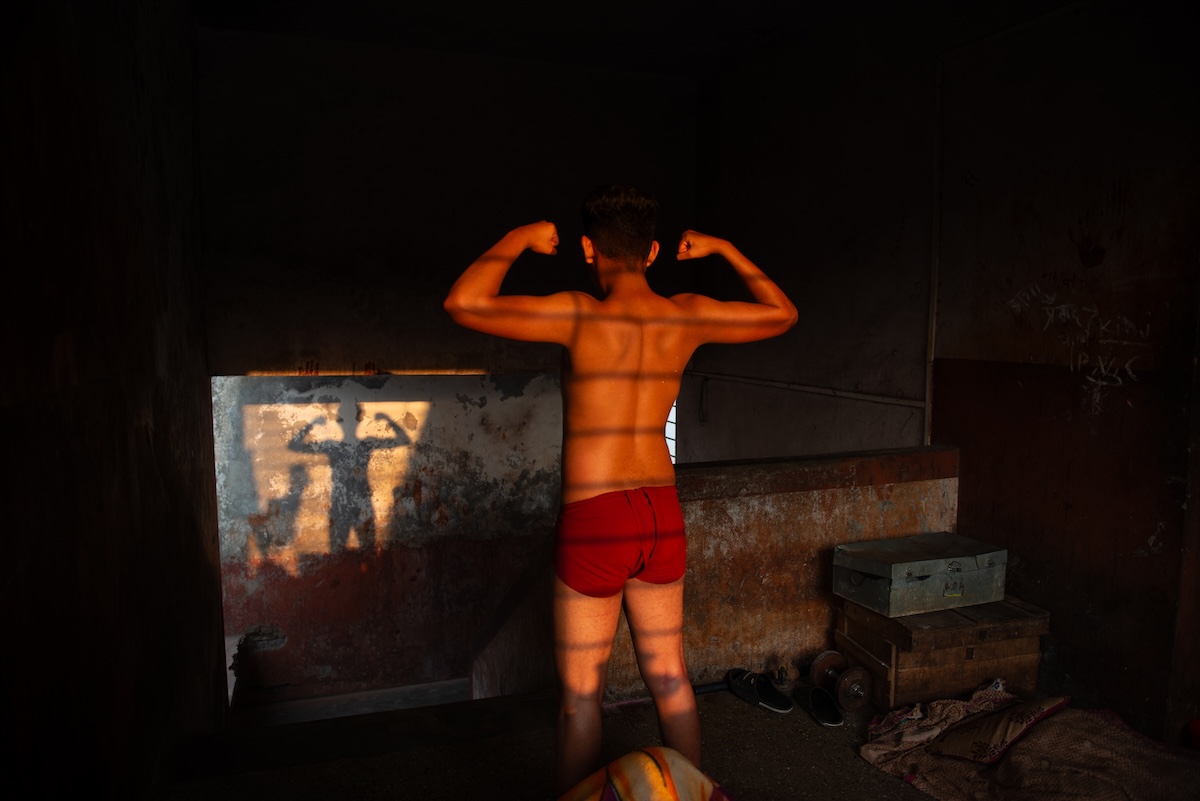
‘Me and my shadow’ – Soham More, playfully interacts with his shadow as he poses for a photograph shortly after the afternoon practice at Motibaq Talim, Kolhapur, Maharashtra.
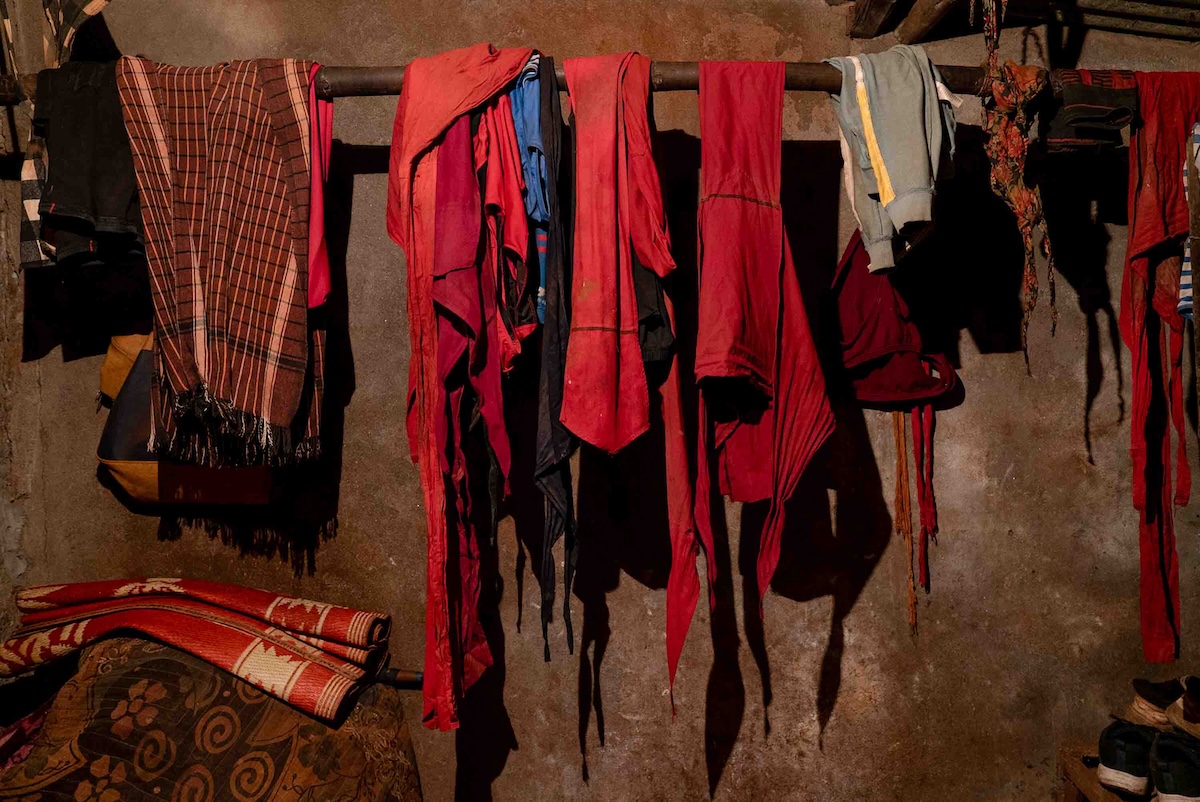
Langots on the wall – Langots are cloth undergarments worn by wrestlers that provide protection to the sensitive genital area.
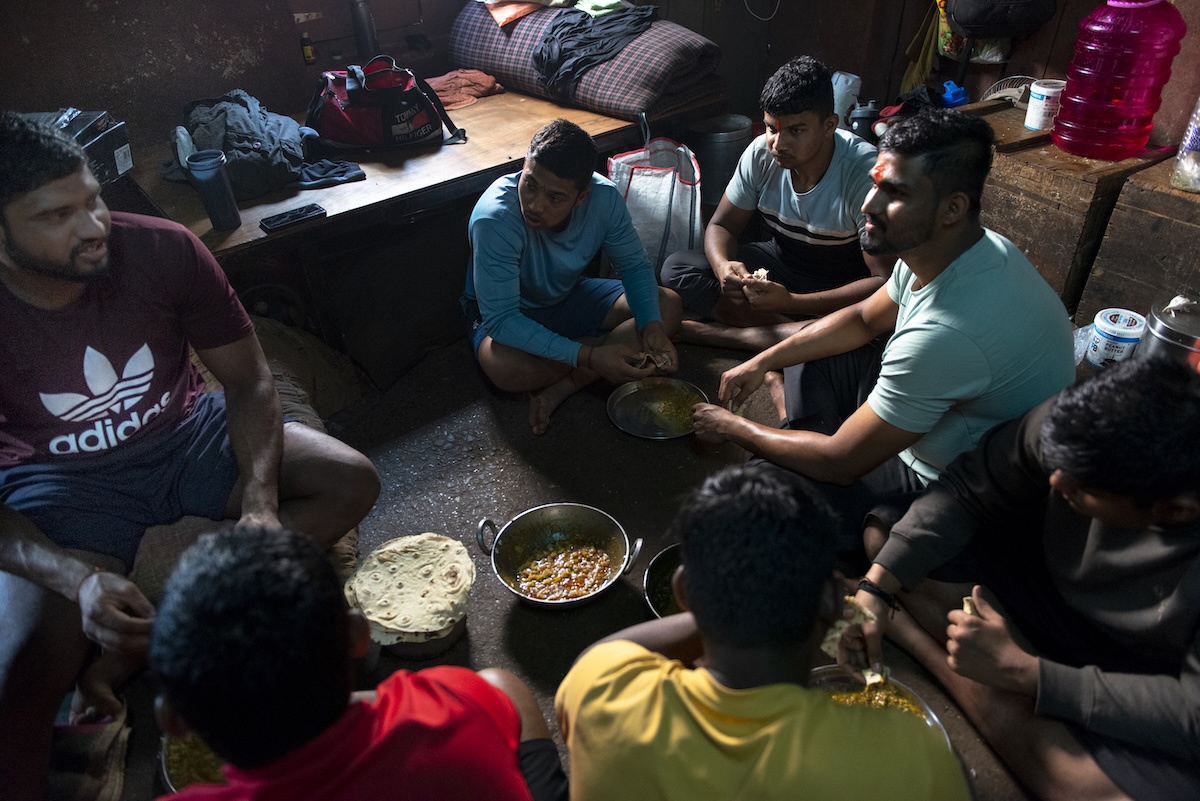
All together as a family -Athletes follow their daily schedule without any deviations. In-between the two daily training sessions, there is a period of cooking, rest and sleep. Νutrition is very important for athletes as is rest between workouts.
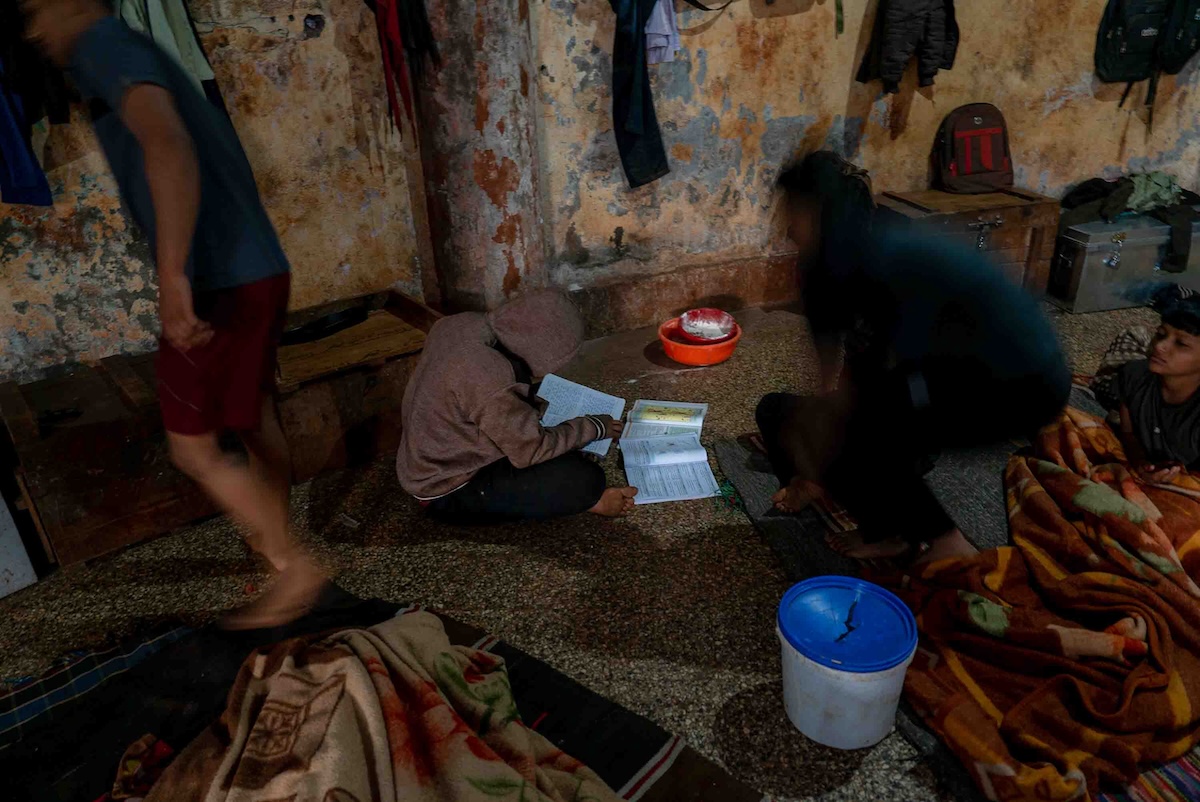
A young wrestler does his schoolwork before going to sleep in Shree Shahu Vyayam Akhada Talim, Kolhapur
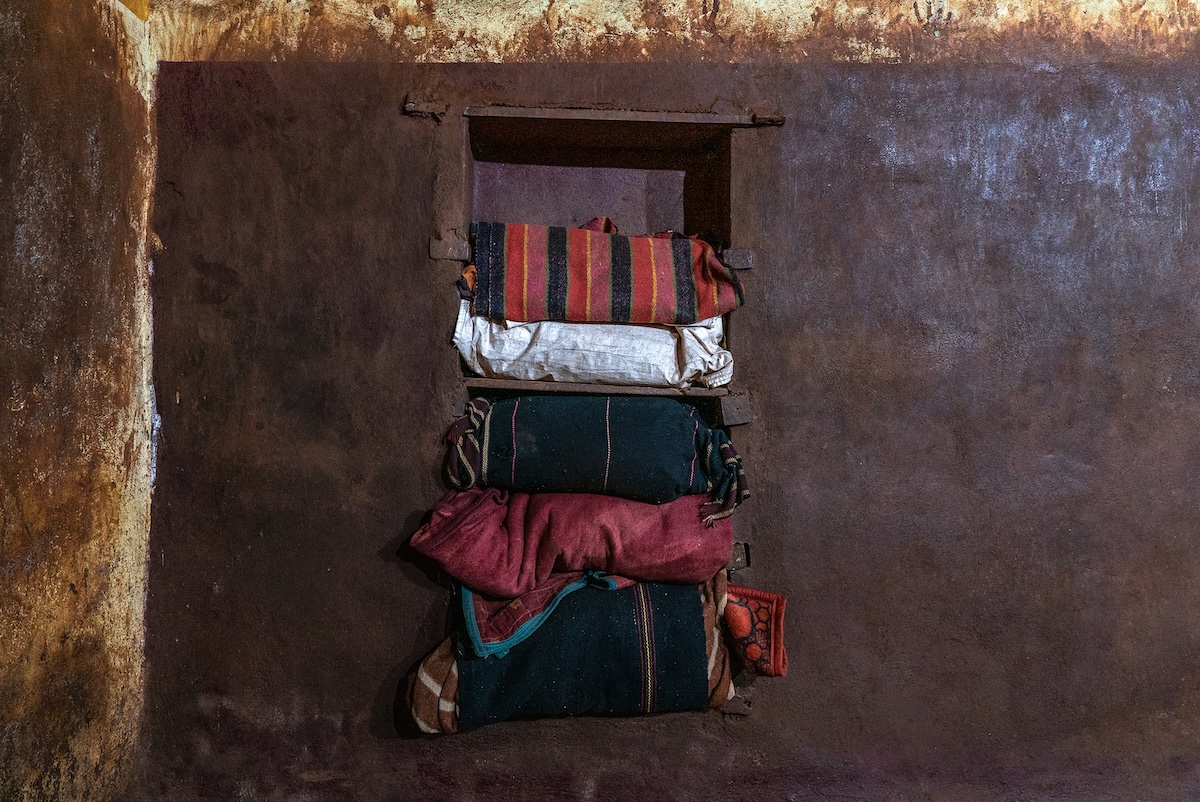
On hold… – Rolled blankets stacked in a nook at Gangavesh Taleem.
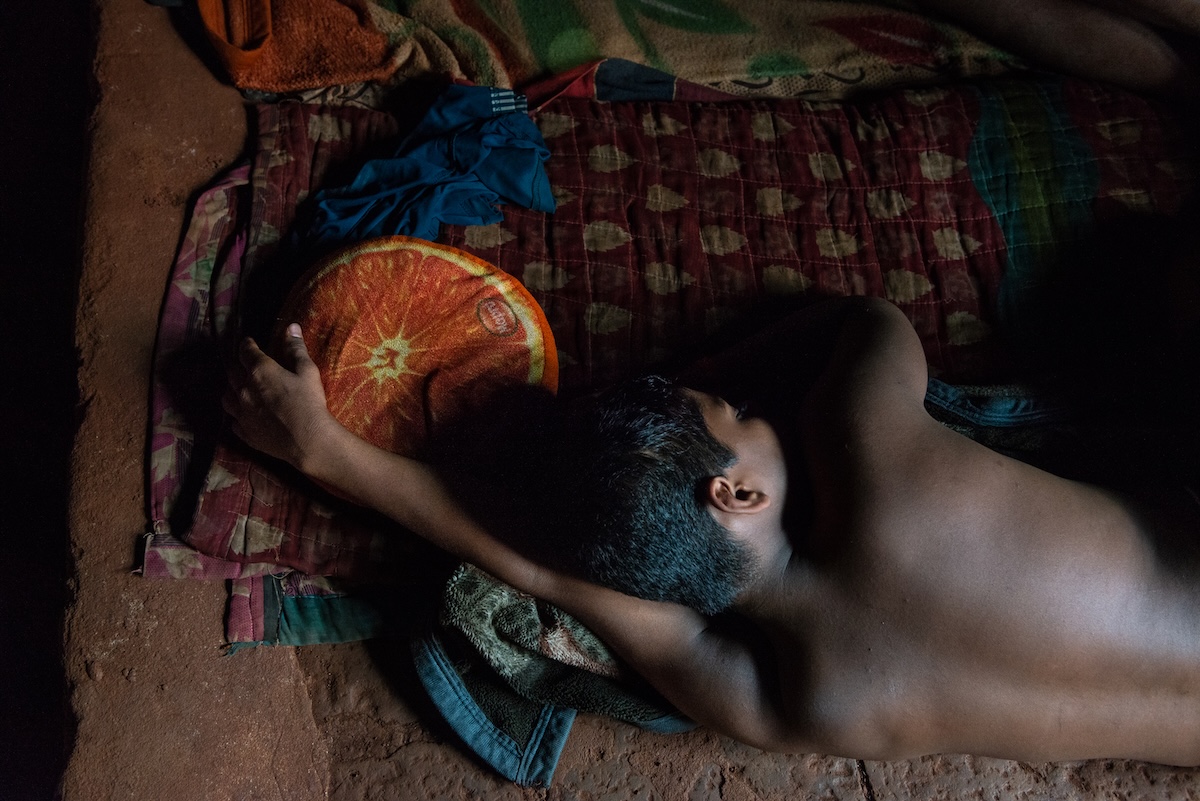
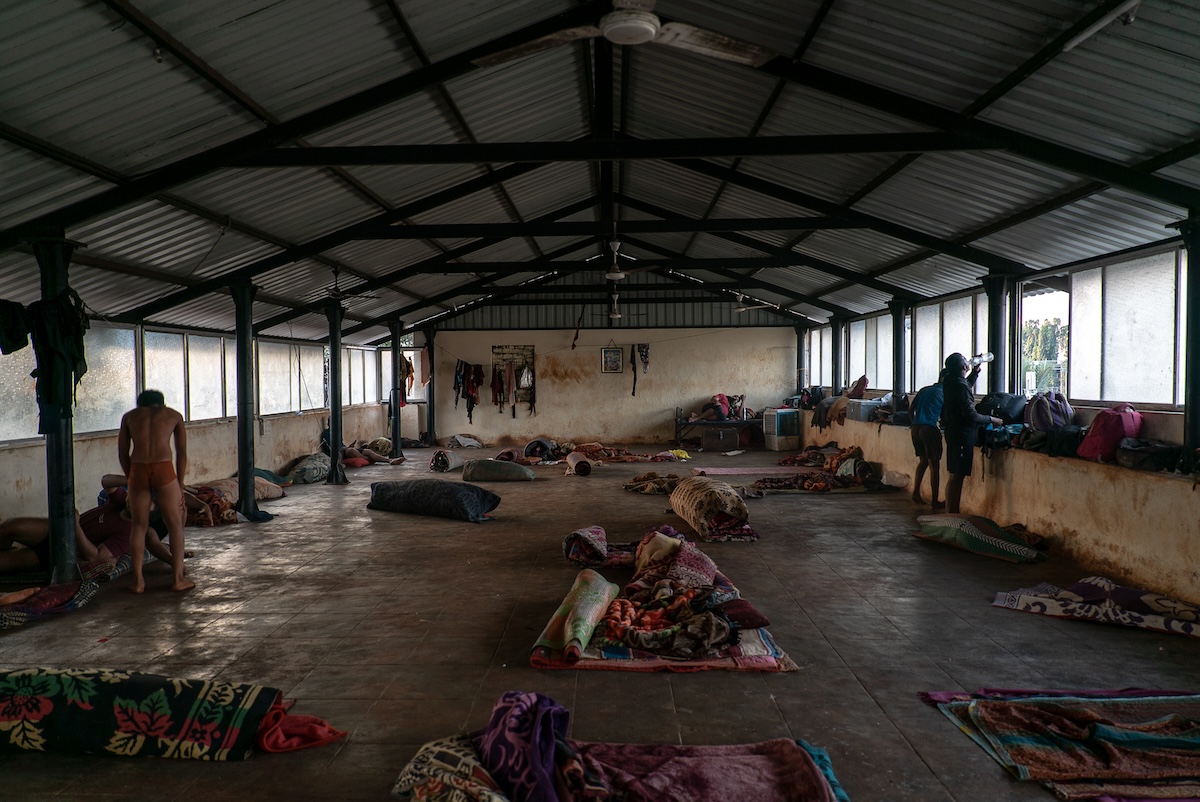
Sleeping time… – Pravin Mali (12) while sleeping on the floor and around Gangavesh Talim’s pit.
The Sleeping Room – A sleeping area on the upper floor of Jai Bhavani Shahupuri Talim, Kolhapur, Maharashtra.
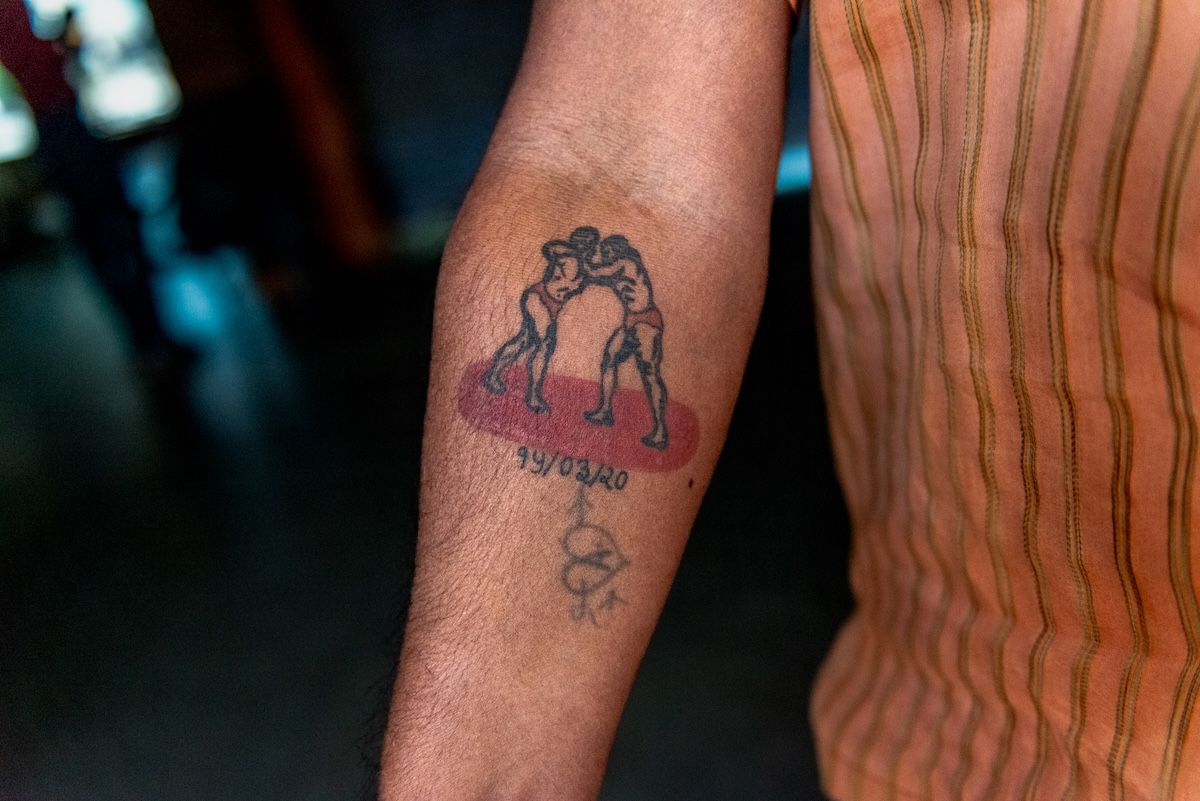
The man with the tattoos – A run Basavaraj Havale, a 36-year-old farmer from Jevali, Osmanabad, is an avid kushti enthusiast. Over the past decade, he has consistently traveled to various venues to watch live matches. Three years ago, he established a talim in his village to facilitate training opportunities for his sons and other young individuals. Adorned with several kushti tattoos, he says his family fully supports his unwavering passion for wrestling.
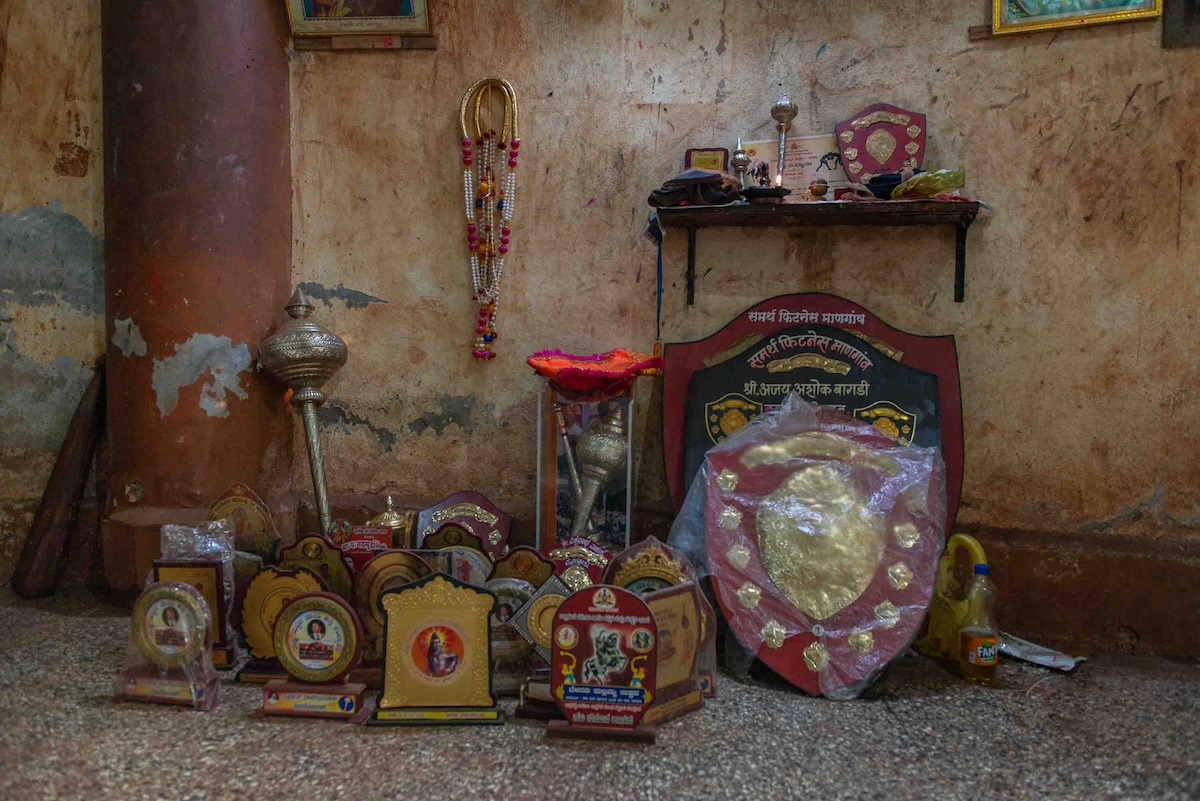
Winning trophies is the culmination of an athlete’s efforts. A corner full of trophies and awards at Shree Shahu Vyayam Akhada Talim.
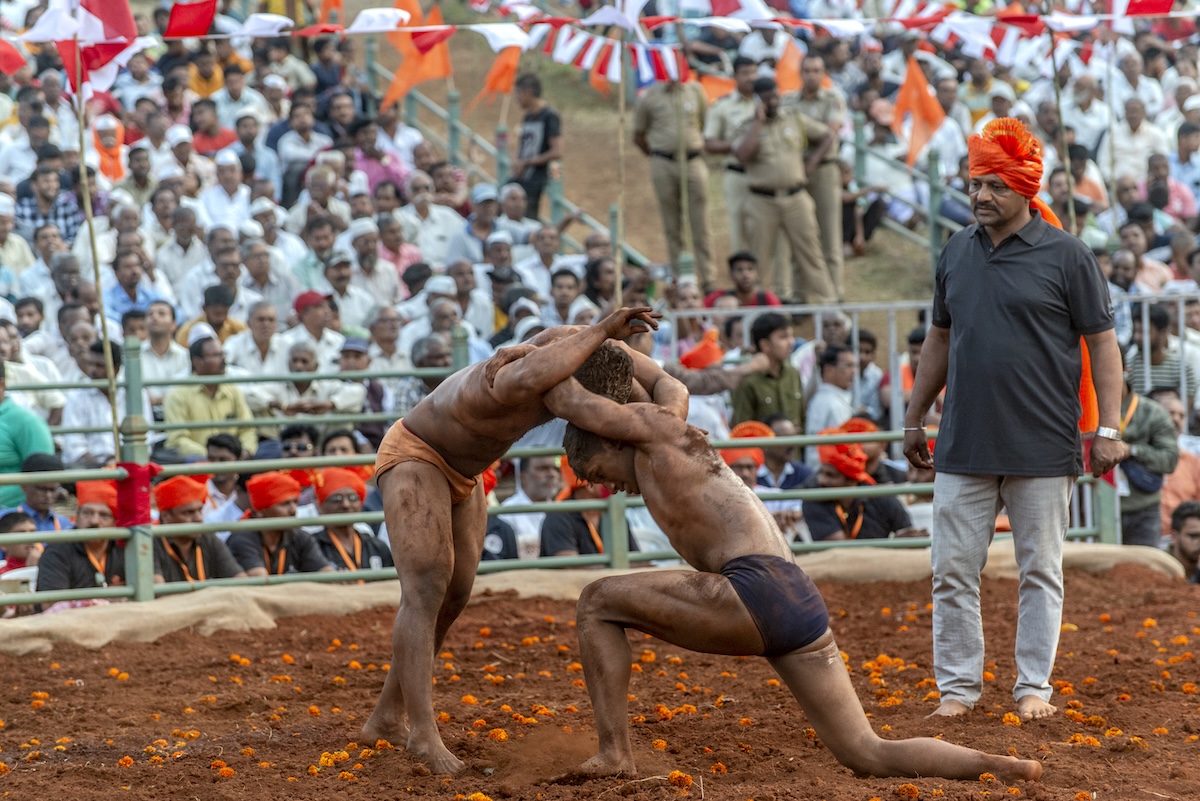
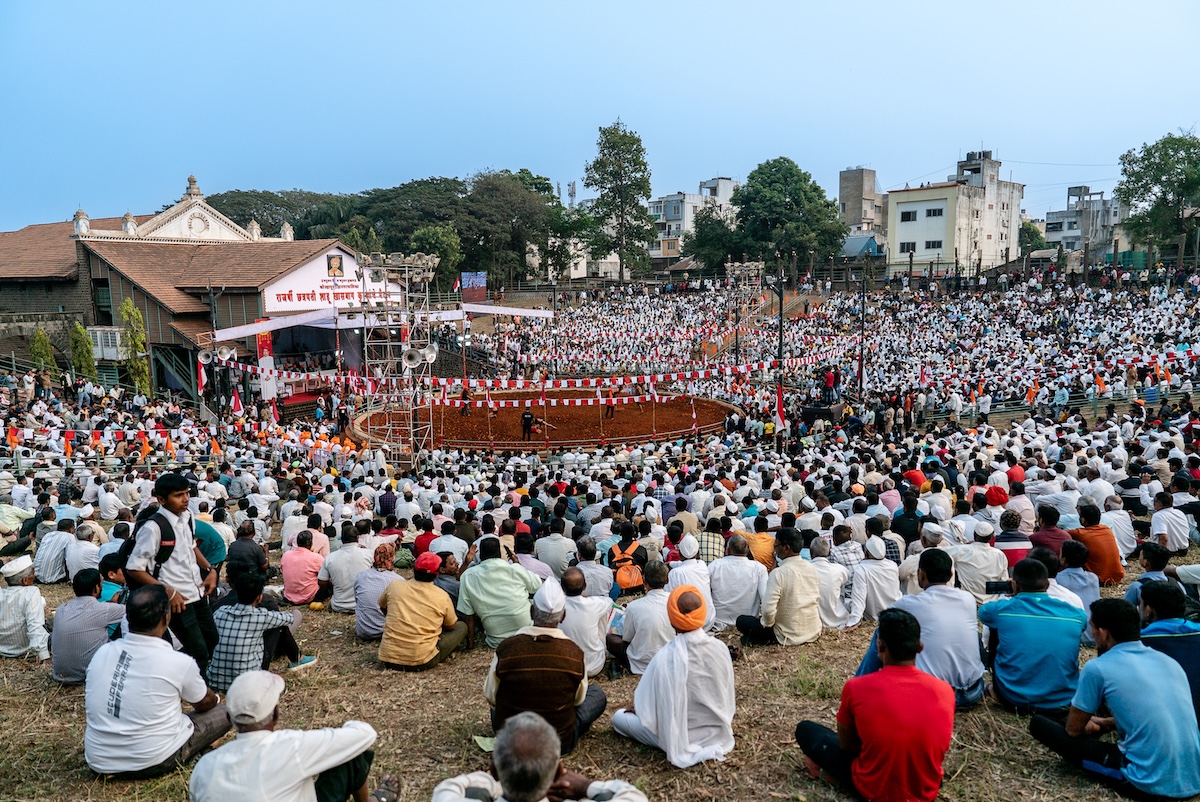
The race – The length of each match can seem endless as the two wrestlers fighting body to body.
The competition day – Every athlete aspires to excel in tournaments and become a champion that will bring not only money but also fame (The Khasbag Maidan Stadium)

Soil Is Our Mother

In an age when technology has infiltrated every aspect of life, including sports, traditional Indian wrestling resists the modern way of training and adopts a monastic lifestyle.

The traditional form of wrestling known as kushti dates back thousands of years and holds a special place in India’s sporting culture.

Hundreds of young men and teenagers from mostly poor rural areas move to the city of Kolhapur every year with the goal of becoming kushti champions. Doing so will bring prestige, fame and money – but it’s an arduous journey.

The wrestlers train for years several hours a day, seven days a week, in tough conditions.

Once warmed up, they dive into the sunken pit and practice kushti, a traditional and popular form of wrestling played on red soil mixed with a number of ingredients – from camphor, coconut milk and turmeric to ghee, lemon juice and herbs.

Sharing tiny spaces, they all cook together in groups and sleep on the floor. United by their shared dream, they forge deep bonds that transcend the boundaries of a wrestling pit.

(The photo series Soil is our Mother is the culmination of a three-month journey that started in early 2023. It is part of a wider project that also includes a documentary film that is currently in post-production).

Info

Category:
documentary
  • facebook
  • twitter
Next project

Feel free to contact me or follow me on social media.

Office Locations

Greece

Qatar

Start a conversation

dimitris.a.sideridis@gmail.com

+30 6955215732 Greece

+974 55396463 Qatar

Social Networks
  • Website
  • Instagram
  • LinkedIn
  • Twitter
  • Transeurope

Dimitris Sideridis Photography © Copyright 2022. All rights reserved.

All images on this website are legally protected from unauthorized use by International Copyright Law. The images may not be used or reproduced in any way without explicit written licensing agreement from the photographer.